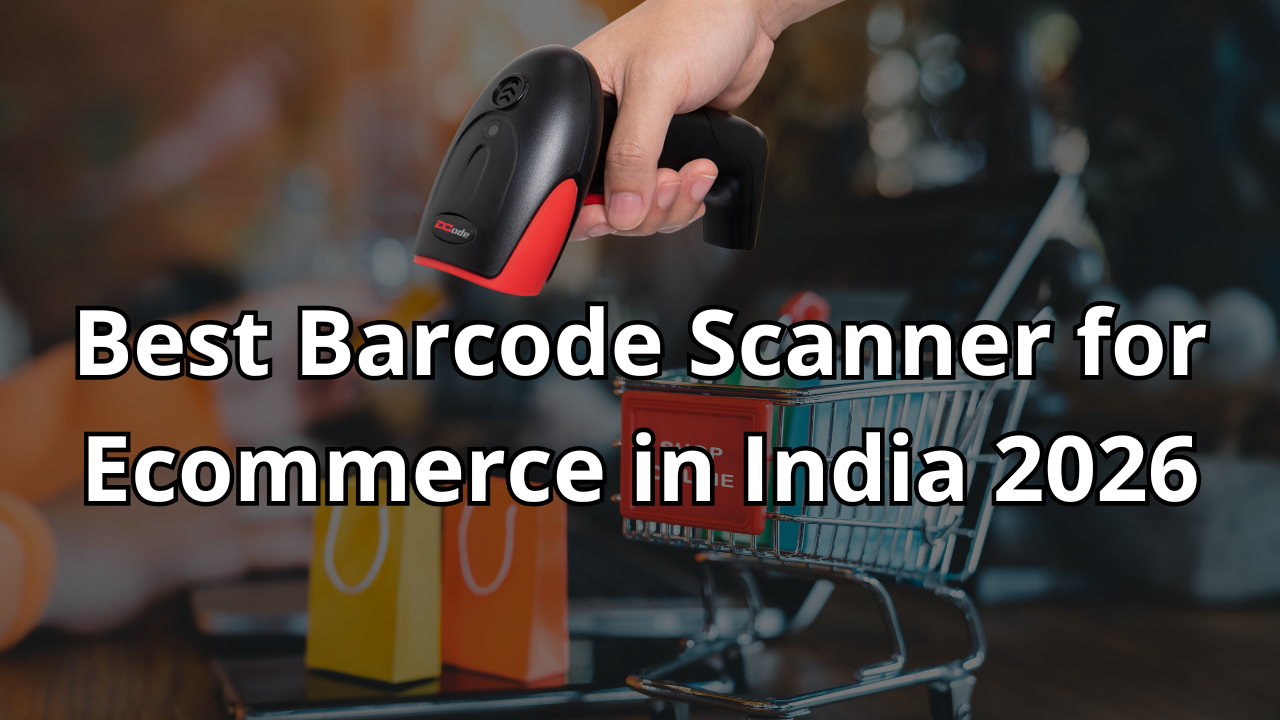
Best Barcode Scanner for Ecommerce in India 2026
The Indian ecommerce industry is expanding at an unprecedented pace, making efficient inventory management more important than ever before. According to recent industry reports, India’s ecommerce market is projected to exceed US$160 billion by 2026, while warehouse automation and digital logistics continue to accelerate across the country. Businesses selling on Amazon, Flipkart, Meesho, Shopify, WooCommerce, and their own websites are increasingly investing in barcode technology to improve operational efficiency and reduce costly manual errors.
Whether you’re running a small online business from your home or managing a large fulfillment warehouse, choosing the right barcode scanner ecommerce India solution can significantly improve productivity. A reliable scanner enables faster order processing, accurate inventory updates, seamless stock management, and improved customer satisfaction.
This comprehensive guide explains everything you need to know before purchasing a barcode scanner in 2026. We’ll compare different scanner types, highlight the most important buying factors, discuss leading brands available in India, and help you choose the perfect device based on your business size and operational needs.
Why Barcode Scanners Matter for Ecommerce Businesses
Running an ecommerce business today involves much more than simply listing products online. Every order passes through multiple stages, including receiving inventory, stock management, order picking, packaging, shipping, returns, and auditing. Each stage presents opportunities for human error when handled manually. A simple mistake in entering SKU numbers can lead to incorrect shipments, inventory mismatches, customer complaints, and financial losses.
Barcode scanners eliminate these problems by automating data capture. Instead of typing lengthy product codes manually, warehouse staff simply scan a barcode, instantly updating inventory records in the ERP, POS, or warehouse management system. This not only improves speed but also dramatically reduces errors.
Industry analysts estimate that the Asia-Pacific region will account for nearly 37% of the global barcode scanner market in 2026, largely driven by ecommerce, logistics, retail modernization, and warehouse automation. Portable handheld scanners remain the dominant category because they combine affordability, flexibility, and high operational efficiency.
For ecommerce businesses operating in India, barcode scanners are no longer optional accessories—they are essential productivity tools. Companies handling even a few hundred daily orders can recover their investment quickly through improved efficiency and reduced labor costs.
Growth of Ecommerce in India
India has become one of the world’s fastest-growing ecommerce markets. Rising smartphone penetration, affordable internet access, digital payment adoption, and improved logistics networks have encouraged millions of consumers to shop online. Government initiatives supporting digital transformation have also accelerated adoption among small and medium-sized businesses.
According to recent industry estimates, India’s ecommerce market is expected to continue growing rapidly throughout 2026 and beyond. The expansion of quick commerce, D2C brands, omnichannel retail, and third-party logistics providers has created enormous demand for warehouse automation technologies such as barcode scanners and label printers.
This growth directly affects warehouse operations. Faster delivery expectations mean businesses cannot afford slow manual inventory processes. Customers expect same-day or next-day shipping, making real-time inventory visibility a necessity rather than a luxury.
As ecommerce scales, barcode scanning becomes one of the simplest yet most impactful technologies businesses can implement.
Why Inventory Accuracy is Critical
Imagine selling a product online that your system incorrectly shows as available. The customer places an order, but your warehouse cannot find the item. The order gets cancelled, customer trust declines, negative reviews increase, and marketplace rankings suffer.
Inventory inaccuracies can quickly become expensive.
Barcode scanners dramatically improve inventory accuracy by ensuring every stock movement is digitally recorded. Whether products are received from suppliers, transferred between warehouse locations, packed for shipment, or returned by customers, scanning verifies every transaction.
Benefits include:
| Manual Inventory | Barcode-Based Inventory |
|---|---|
| Higher human errors | Excellent accuracy |
| Slow stock counting | Rapid inventory audits |
| Manual data entry | Instant digital updates |
| Delayed order fulfillment | Faster dispatch |
| Difficult product tracking | Real-time visibility |
Businesses processing hundreds or thousands of daily orders typically see immediate operational improvements after implementing barcode scanning.
What is a Barcode Scanner?
A barcode scanner is an electronic device that reads printed or digital barcodes and converts them into usable information for software applications. Instead of manually entering product numbers, operators simply point the scanner toward the barcode, press the trigger (or use auto-scan mode), and the information is transmitted instantly.
Modern barcode scanners can integrate with warehouse management systems, ERP software, ecommerce platforms, billing software, inventory management systems, and POS solutions.
Today’s scanners are considerably more advanced than earlier generations. Many devices support wireless communication, Bluetooth connectivity, mobile computers, Android terminals, USB plug-and-play installation, and cloud-based inventory systems.
The continued growth of automation across retail, manufacturing, healthcare, logistics, and ecommerce is one of the primary reasons analysts expect the global barcode scanner market to grow steadily over the coming years.
How Barcode Scanners Work
Although barcode scanners appear simple, they use sophisticated imaging technology to capture information quickly and accurately.
The scanner projects light—or captures an image using a camera sensor—onto the barcode. The reflected light pattern is analyzed by the decoding engine, which converts the barcode into digital information. That information is then transmitted to the connected computer, tablet, smartphone, or POS system.
Newer imaging scanners can successfully read:
- Printed barcodes
- Mobile phone screens
- Damaged labels
- Poor-quality barcodes
- High-density barcodes
- QR codes
This flexibility makes them especially useful for ecommerce businesses handling products from multiple suppliers.
1D vs 2D Barcode Scanners
Selecting between 1D and 2D scanners depends on your business requirements.
| Feature | 1D Scanner | 2D Scanner |
|---|---|---|
| Reads linear barcodes | Yes | Yes |
| Reads QR Codes | No | Yes |
| Reads screen barcodes | Limited | Excellent |
| Future-ready | Moderate | Excellent |
| Ecommerce suitability | Good | Best |
For most ecommerce businesses in 2026, investing in a 2D barcode scanner is the better long-term decision. Marketplaces, courier companies, and inventory systems increasingly rely on QR codes and advanced barcode formats.
Types of Barcode Scanners
Choosing the right barcode scanner is just as important as selecting the right inventory management software. Ecommerce businesses have different operational requirements depending on the number of daily orders, warehouse size, product categories, and workforce. Some businesses only need a scanner at the billing counter, while others require multiple mobile scanners moving across large warehouses. Understanding the different types of barcode scanners available in India will help you make a smarter investment.
Wired Barcode Scanners
Wired barcode scanners remain one of the most popular options for ecommerce businesses because they are reliable, affordable, and easy to install. Connected through a USB cable, these scanners provide instant communication with computers, laptops, and POS systems without worrying about charging batteries or wireless interference.
For businesses processing orders from a fixed workstation, wired scanners are often the best choice. They require very little maintenance and generally offer faster response times than wireless alternatives. Most modern wired scanners support plug-and-play functionality, meaning users can simply connect the scanner and begin working immediately without installing complicated software.
Small ecommerce stores, pharmacy counters, bookstores, courier booking centers, and retail outlets often prefer wired barcode scanners because of their simplicity and cost-effectiveness.
Wireless Barcode Scanners
Wireless barcode scanners provide greater flexibility by allowing warehouse employees to move freely while scanning products. Instead of being restricted by a cable, operators can pick products directly from warehouse shelves, reducing unnecessary walking and improving productivity.
These scanners usually communicate through a USB receiver with an operating range of up to 100 meters depending on warehouse conditions. Businesses managing medium to large warehouses often find wireless scanners significantly improve operational efficiency.
Battery technology has also improved considerably. Many wireless scanners now last an entire work shift on a single charge, making them suitable for continuous ecommerce operations.
Bluetooth Barcode Scanners
Bluetooth barcode scanners have become increasingly popular with ecommerce sellers who use smartphones and tablets for inventory management. These scanners pair directly with Android devices, iPhones, tablets, and laptops without requiring additional receivers.
Bluetooth scanners are especially useful for businesses using cloud-based inventory software. Warehouse employees can scan products, update inventory in real time, and verify shipments while walking throughout the warehouse.
As mobile commerce continues expanding in India, Bluetooth barcode scanners provide an excellent balance between portability and functionality.
Features to Consider Before Buying
Selecting the best barcode scanner ecommerce India solution involves more than simply comparing prices. A scanner that works perfectly for a retail counter may not perform well inside a busy ecommerce warehouse. Understanding the most important buying factors ensures your investment continues delivering value for many years.
Scanning Speed
Warehouse productivity depends heavily on scanning speed. During peak shopping seasons like Diwali, Amazon Great Indian Festival, or Flipkart Big Billion Days, employees may need to process thousands of products daily. Slow scanners create bottlenecks that delay shipments and increase customer complaints.
Modern imaging barcode scanners can decode damaged, faded, or poorly printed barcodes almost instantly. Investing in faster scanning technology reduces operator fatigue while increasing daily throughput.
Connectivity Options
Today’s businesses require scanners that integrate seamlessly with multiple devices. USB remains the standard option for desktop computers, while Bluetooth and wireless connectivity provide additional flexibility for mobile operations.
Before purchasing a scanner, verify compatibility with your warehouse management software, ERP, POS application, or ecommerce platform.
Durability
Warehouse environments are demanding. Barcode scanners are frequently dropped, exposed to dust, and used continuously throughout the day. Choosing a rugged scanner with a high drop resistance rating can significantly reduce replacement costs.
Industrial-grade scanners often survive repeated drops from heights of 1.5 to 2 meters and continue functioning in dusty environments.
Battery Life
Battery performance is crucial for wireless and Bluetooth scanners. Devices requiring frequent charging interrupt workflows and reduce warehouse productivity.
Look for scanners capable of lasting at least 8–12 hours under normal working conditions. Fast charging capabilities also minimize downtime between shifts.
Best Barcode Scanner for Ecommerce in India 2026
Several global and Indian manufacturers offer excellent barcode scanning solutions. The ideal choice depends on your business size, scanning volume, budget, and operational requirements.
DCode Barcode Scanners
For businesses looking for reliable performance at competitive pricing, DCode has established itself as one of the fastest-growing barcode scanner brands in India. Its portfolio includes wired, wireless, Bluetooth, handheld, presentation, and industrial barcode scanners suitable for ecommerce warehouses, retail stores, courier companies, healthcare facilities, manufacturing units, and logistics operations.
Popular models include the DC7111 1D Wired Barcode Scanner, DC7121 2D Wired Barcode Scanner, DC7122BT Wireless Bluetooth Barcode Scanner, and DC7142 2D Presentation Scanner. These scanners support rapid decoding, ergonomic designs, plug-and-play installation, and compatibility with major inventory management systems.
For small and medium ecommerce businesses, DCode provides an excellent balance between affordability and performance.
Zebra
Zebra continues to be one of the most recognized enterprise barcode scanner manufacturers globally. Its scanners are widely used in logistics, warehousing, transportation, manufacturing, and healthcare.
Although Zebra scanners typically cost more than entry-level alternatives, they offer exceptional durability, advanced scanning engines, and long operational life, making them ideal for businesses handling thousands of daily scans.
Honeywell
Honeywell barcode scanners are known for their high-quality imaging technology and reliable performance. Many ecommerce warehouses use Honeywell scanners for inventory management because of their fast decoding speed and ability to read damaged or low-quality labels.
Honeywell also offers rugged industrial scanners capable of operating in demanding warehouse environments.
Datalogic
Datalogic has built a strong reputation for innovative barcode scanning technologies. Their scanners feature advanced motion sensing, ergonomic designs, and excellent decoding performance.
Businesses requiring premium scanning performance often consider Datalogic alongside Zebra and Honeywell.
Brand Comparison
| Brand | Best For | Strengths |
|---|---|---|
| DCode | SMEs & Ecommerce | Affordable, reliable, excellent value |
| Zebra | Enterprise Warehouses | Rugged, premium performance |
| Honeywell | Logistics | High-speed decoding |
| Datalogic | Industrial Applications | Advanced imaging technology |
Buying Guide
If you’re purchasing your first barcode scanner, start by evaluating your business requirements instead of focusing solely on price. Ask yourself how many orders you process daily, whether your employees move around the warehouse, and if you need to scan QR codes in addition to traditional barcodes.
For businesses processing fewer than 300 orders per day, a wired 2D barcode scanner is often sufficient. Medium-sized ecommerce businesses handling several hundred to a few thousand daily orders benefit from wireless or Bluetooth scanners that improve mobility and productivity. Large fulfillment centers should consider rugged industrial scanners capable of continuous operation under demanding conditions.
It is also important to think about future growth. Investing slightly more in a 2D scanner today may eliminate the need for replacement later as QR codes and digital inventory systems become increasingly common.
Finally, always purchase from an authorized supplier offering technical support, warranty coverage, and readily available spare parts. Reliable after-sales service is just as valuable as scanner performance.
Conclusion
The rapid expansion of ecommerce across India has transformed barcode scanners from optional accessories into essential business tools. Accurate inventory management, faster order fulfillment, fewer shipping errors, and improved warehouse productivity all depend on reliable barcode scanning technology.
Whether you operate a small online store or manage a large fulfillment warehouse, selecting the right scanner will save time, reduce operational costs, and improve customer satisfaction. Businesses should carefully evaluate scanning speed, connectivity, durability, battery life, and compatibility before making a purchase.
For most ecommerce businesses in 2026, investing in a modern 2D barcode scanner offers the greatest long-term value. It supports traditional barcodes, QR codes, mobile screen scanning, and future warehouse automation initiatives. Combined with reliable inventory software and quality barcode labels, the right scanner becomes a key component of an efficient ecommerce operation.
Choosing the best barcode scanner ecommerce India solution is ultimately about matching technology with your business goals. The right investment today can support faster growth, greater efficiency, and a more scalable warehouse tomorrow.
Frequently Asked Questions
1. Which barcode scanner is best for ecommerce in India?
For small and medium ecommerce businesses, a 2D barcode scanner with USB or Bluetooth connectivity is the most practical choice. Brands like DCode, Zebra, Honeywell, and Datalogic offer reliable options for different budgets.
2. Should I buy a 1D or 2D barcode scanner?
A 2D barcode scanner is recommended because it reads both traditional barcodes and QR codes, making it more future-ready for ecommerce operations.
3. Are wireless barcode scanners better than wired scanners?
Wireless scanners offer greater mobility and are ideal for warehouse operations. Wired scanners remain an excellent choice for fixed workstations due to their affordability and reliability.
4. Can barcode scanners work with Shopify, WooCommerce, and Amazon inventory?
Yes. Most USB and Bluetooth barcode scanners function as keyboard input devices and are compatible with popular ecommerce platforms and inventory management software.
5. What features should I prioritize when buying a barcode scanner?
Focus on scanning speed, barcode compatibility, durability, connectivity, battery life, warranty, and after-sales support. These factors have a greater impact on long-term performance than price alone.